
-9%
$55.00 Original price was: $55.00.$50.00Current price is: $50.00.
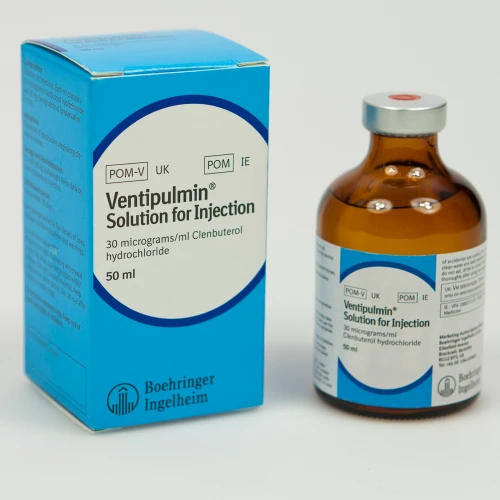
Ventipulmin Injection 50mL is a veterinary injectable solution containing clenbuterol hydrochloride at 0.03mg/mL. Current European veterinary medicine records identify the injectable formulation as a medicine for horses, with intravenous administration and a 50mL vial presentation.
Clenbuterol is a selective beta-2 adrenergic agonist with bronchodilating properties. Veterinary product information describes Ventipulmin as being used for symptomatic treatment of respiratory conditions in horses involving bronchospasm and airway obstruction.
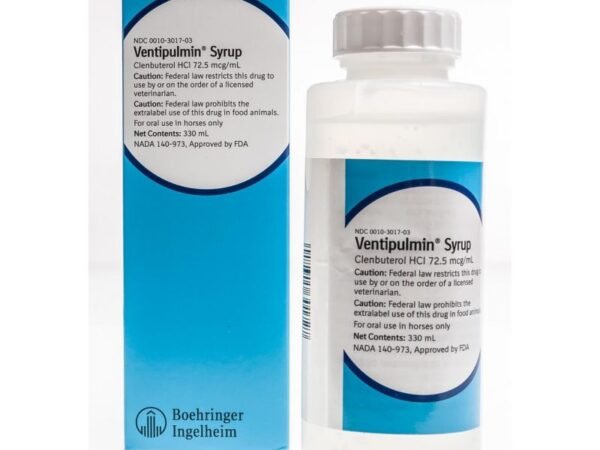
The injectable product is different from Ventipulmin Syrup. In the United States, the FDA-approved Ventipulmin product is an oral syrup containing 72.5 micrograms/mL of clenbuterol hydrochloride and is labeled for horses only. Therefore, customers should not substitute the syrup’s instructions for the injectable formulation.
For customers searching for Ventipulmin Injection 50mL, Ventipulmin 50mL, clenbuterol injection for horses, or Ventipulmin injectable solution, identifying the exact formulation and country-specific authorization is essential.
Ventipulmin Injection is a veterinary medicine containing:
These details are confirmed by current European veterinary medicine databases.
The injectable formulation is prescription veterinary medicine in the jurisdictions referenced by these databases.
Ventipulmin Injection is specifically associated with equine respiratory treatment.
The French veterinary medicines database currently lists VENTIPULMIN SOLUTION INJECTABLE with clenbuterol hydrochloride as the active substance, identifies horses and mares as target species and lists a 50mL vial presentation reserved for veterinary administration.
This makes Ventipulmin Injection particularly relevant for veterinary professionals managing horses with respiratory conditions where bronchodilation is clinically appropriate.
However, coughing, nasal discharge, increased respiratory effort and poor exercise tolerance can result from many different conditions. A veterinarian should determine the underlying cause before treatment.
The active ingredient in Ventipulmin Injection is clenbuterol hydrochloride.
Clenbuterol preferentially stimulates beta-2 adrenergic receptors in bronchial smooth muscle. Veterinary product information describes this action as producing significant bronchodilation and reducing airway resistance. It also describes an effect on histamine release and mucociliary clearance in horses.
The result is relaxation of airway smooth muscle, helping improve airflow when bronchoconstriction is contributing to respiratory obstruction.
Respiratory diseases can cause narrowing of the airways.
When bronchial smooth muscle contracts, the airway becomes narrower and resistance to airflow increases.
Clenbuterol acts primarily on beta-2 receptors in the bronchial smooth muscle. Activation of these receptors promotes relaxation of the airway muscle.
This bronchodilating action can help improve airflow in appropriately selected horses.
Ventipulmin is therefore a symptomatic respiratory medicine rather than a treatment that automatically eliminates the underlying cause of every respiratory disease.
Bronchospasm occurs when the muscles surrounding the airways contract and narrow the airway passages.
Veterinary information for Ventipulmin Injection describes use in horses with respiratory disorders of a bronchospastic nature.
When bronchospasm contributes to respiratory difficulty, bronchodilation can be an important component of treatment.
The veterinarian may also investigate other contributing factors, including:
Ventipulmin products are associated with the management of airway obstruction such as chronic obstructive pulmonary disease (COPD) in horses.
The current U.S. Ventipulmin label identifies the oral product for management of horses affected with airway obstruction such as that occurring with COPD.
The injectable formulation is separately authorized in several European markets.
Because product formulations and approved indications differ between countries, the instructions for the specific injectable product should always be followed.
Some European product information lists respiratory allergies among the conditions for which Ventipulmin may be used in horses.
Respiratory allergies can be associated with exposure to environmental irritants such as:
Medication alone may not be sufficient if environmental triggers remain.
Veterinary management can therefore include both appropriate medicine and environmental changes.
Respiratory obstruction in horses can involve excessive mucus production or accumulation.
European product information describes Ventipulmin use in respiratory infections where mucus accumulation and/or bacterial proliferation contributes to respiratory obstruction.
Conditions mentioned include bronchitis, bronchiolitis, bronchopneumonia and influenza-related respiratory disease.
Where infection is present, the veterinarian may need to use additional treatment directed at the underlying infection.
Ventipulmin should not be regarded as an antibiotic.
Bronchitis involves inflammation of the airways.
If bronchospasm contributes to airway narrowing, a bronchodilator may form part of veterinary management.
The appropriate treatment depends on the cause and severity of the respiratory disease.
A horse with persistent coughing or abnormal breathing should be examined rather than treated solely according to symptoms.
Bronchopneumonia can involve inflammation, infection and mucus accumulation within the respiratory tract.
Veterinary treatment should focus on the underlying disease.
Ventipulmin may have a role where bronchodilation is clinically indicated, but it does not replace appropriate diagnosis or treatment of infection.
Airway obstruction can reduce airflow and make breathing more difficult.
Bronchodilation can reduce airway resistance in horses with appropriate bronchoconstrictive components.
The veterinary product information describes clenbuterol’s bronchodilating activity as a major part of its pharmacological effect.
This is why Ventipulmin is commonly associated with equine respiratory medicine.
Current European veterinary medicine information identifies the injectable formulation’s route as intravenous use.
Because this is an injectable veterinary medicine, administration should be performed by a veterinarian or appropriately qualified veterinary professional.
The route of administration should not be changed based on instructions for Ventipulmin Syrup.
In particular, the oral syrup and injectable solution have different concentrations and different administration routes.
The correct dose must be taken from the current label or veterinary product information for the exact injectable formulation and country.
This is particularly important because Ventipulmin exists in different formulations.
For example, the U.S. Ventipulmin product is an oral syrup containing 72.5 micrograms/mL, whereas the injectable European product contains 0.03mg/mL (30 micrograms/mL).
Therefore, dosage instructions for the U.S. syrup should not be applied to the 50mL injection.
The veterinarian should determine the appropriate injectable regimen based on the product label, horse and clinical condition.
Searching for Ventipulmin 50mL can produce information about both injectable and oral formulations.
This can cause confusion because:
Ventipulmin Injection
Ventipulmin Syrup
The FDA-approved U.S. label specifically identifies the syrup as an oral product.
Customers should therefore confirm the exact presentation before purchasing.
Healthy respiratory function is essential for horses, particularly animals involved in athletic activity.
Respiratory problems can become more noticeable during exercise because oxygen demand increases.
Potential signs of respiratory disease can include:
These symptoms can have multiple causes.
A veterinarian can determine whether bronchodilator treatment is appropriate.
Performance horses require careful respiratory management.
Airway disease can negatively affect exercise tolerance and performance.
However, clenbuterol is a regulated substance in many competition settings, and its use can result in medication-control issues.
Historical veterinary literature has documented clenbuterol’s significance to racing regulation.
Competition riders and trainers should always consult the current rules of the relevant racing or equestrian organization.
Do not assume that a veterinary prescription automatically means the substance is permitted during competition.
Medication regulations can differ among:
A horse treated with clenbuterol may be subject to specific withdrawal or prohibited-substance rules.
The responsible veterinarian and trainer should verify the applicable regulations before treatment.
This is especially important when the horse is actively competing.
Current European product information for the injectable formulation lists 28 days for meat and offal in one authorized market and states that it should not be used in animals producing milk for human consumption.
The exact withdrawal requirement depends on the authorization and jurisdiction.
The U.S. oral product, meanwhile, is labeled for horses not intended for food.
Therefore, customers should always check the current local label rather than applying one country’s withdrawal information internationally.
The U.S. Ventipulmin syrup label specifically states that it is for use in horses not intended for food and that federal law restricts the drug to use by or on the order of a licensed veterinarian.
This is another reason customers should distinguish the U.S. oral product from the internationally marketed injectable presentation.
Clenbuterol is a beta-2 adrenergic agonist and can produce systemic effects.
The U.S. Ventipulmin label reports possible adverse reactions including:
It also reports that elevated creatine kinase levels may occur and that ataxia was observed in a small proportion of horses in clinical studies.
Any unexpected or significant reaction should be discussed promptly with the veterinarian.
Because beta-adrenergic agonists can affect cardiovascular function, horses with suspected cardiovascular impairment require particular caution.
The U.S. Ventipulmin label specifically warns against use in horses suspected of having cardiovascular impairment because tachycardia may occur.
The veterinarian should evaluate the horse’s overall cardiovascular status when deciding whether clenbuterol treatment is appropriate.
Pregnancy is another situation requiring professional consideration.
The U.S. Ventipulmin label warns that the product should not be used in pregnant mares near term and notes that effects on reproduction in breeding stallions and broodmares have not been determined.
The relevant label for the specific injectable product should always be consulted.
Clenbuterol’s effects can be influenced by other drugs affecting adrenergic pathways.
The U.S. label notes that beta-adrenergic blocking agents antagonize the effects of Ventipulmin.
Before administration, the veterinarian should be informed about all medicines the horse is currently receiving.
This includes:
Storage requirements should be taken from the product packaging and current local product information.
Customers should:
Do not use injectable medicine if the vial is damaged or the product does not appear as expected.
Customers searching for Ventipulmin Injection 50mL should verify these key details before ordering:
| Product detail | Information |
|---|---|
| Product | Ventipulmin Injection |
| Presentation | 50mL vial |
| Active ingredient | Clenbuterol hydrochloride |
| Strength | 0.03mg/mL |
| Dosage form | Injectable solution |
| Target species | Horse |
| Route | Intravenous |
| Therapeutic class | Beta-2 adrenergic agonist |
| Veterinary use | Respiratory conditions where authorized |
These details are supported by current European veterinary medicine records.
The regulatory situation deserves special attention for U.S. customers.
The FDA-approved Ventipulmin product currently identified in U.S. labeling is Ventipulmin Syrup, not the 50mL injectable formulation. The U.S. label describes an oral syrup containing 72.5 micrograms/mL of clenbuterol hydrochloride and states that it is for horses only.
Customers in the United States should therefore verify the legal and regulatory status of any imported Ventipulmin Injection before attempting to purchase or use it.
Do not assume that an injectable product authorized in Europe has the same approval status in the United States.
Health Canada’s database has historically listed Ventipulmin as a prescription veterinary product for horses, with clenbuterol hydrochloride 0.03mg/mL and intravenous administration, but that particular Canadian listing is marked cancelled post-market as of December 17, 2016.
Canadian customers should therefore check the current Canadian regulatory status rather than assuming that an older registration remains active.
Ventipulmin Injection remains listed in European veterinary medicine databases in multiple markets.
For example, current EU veterinary medicine information lists the 0.03mg/mL injectable formulation for horses, with intravenous administration and a 50mL vial presentation.
France’s veterinary medicines database also currently lists a 50mL presentation and identifies horses and mares as target species.
Customers in France, Germany, Spain, the Netherlands and other European markets should verify the national authorization applicable to their location.
Availability and authorization can differ significantly between countries.
Customers in Australia, Mexico, Canada, the United States and other international markets should verify:
A product available through an international supplier should not automatically be assumed to be legally approved for the same purpose in the customer’s country.
Equines Vet aims to provide straightforward product information that helps horse owners, trainers and veterinary professionals identify the correct product presentation.
For Ventipulmin Injection 50mL, accurate identification is especially important because the Ventipulmin name is associated with multiple formulations.
The injectable solution should not be confused with the oral syrup.
A clear product page helps customers understand:
Ventipulmin Injection 50mL is a veterinary injectable solution containing clenbuterol hydrochloride 0.03mg/mL and authorized for horses in several markets.
The active ingredient is clenbuterol hydrochloride. The injectable formulation contains 0.03mg per mL.
It is used for symptomatic treatment of certain respiratory conditions in horses, including bronchospastic airway disorders and other conditions involving airway obstruction where authorized.
Yes. Clenbuterol is a beta-2 adrenergic agonist with bronchodilating properties.
Yes. Current European veterinary medicine records identify the injectable formulation’s target species as horse.
The current European product information identifies intravenous administration for the injectable formulation.
No. They are different formulations with different concentrations and routes of administration. The U.S. product is an oral syrup containing 72.5 micrograms/mL, while the European injectable contains 0.03mg/mL.
Ventipulmin products are indicated for management of airway obstruction such as that associated with COPD in horses.
Coughing can have many causes. A veterinarian should determine whether bronchospasm or another respiratory condition is responsible before deciding whether clenbuterol is appropriate.
Clenbuterol may be subject to competition medication rules. Trainers and veterinarians should check the current rules of the relevant organization before treating a competition horse.
Potential effects can include sweating, muscle tremors, restlessness, urticaria and tachycardia.
Pregnancy requires veterinary assessment. The U.S. Ventipulmin label specifically warns against use in pregnant mares near term.
A 50mL vial is an authorized presentation of the 0.03mg/mL injectable formulation in European veterinary medicine databases.
Ventipulmin Injection 50mL is a specialized equine respiratory medicine containing clenbuterol hydrochloride 0.03mg/mL. Current veterinary medicine records identify the injectable formulation for horses and specify intravenous administration, with a 50mL vial presentation.
Clenbuterol is a selective beta-2 adrenergic agonist that produces bronchodilation by relaxing bronchial smooth muscle. This makes the medicine relevant to veterinary management of respiratory conditions involving bronchospasm and airway obstruction.
Ventipulmin products are associated with conditions including equine airway obstruction, bronchospastic respiratory disease, COPD and certain respiratory conditions involving mucus accumulation. The underlying cause of respiratory disease should nevertheless be established by a veterinarian, particularly when symptoms are persistent, severe or worsening.
It is also essential to distinguish Ventipulmin Injection 50mL from Ventipulmin Syrup. The U.S. FDA-approved product is an oral syrup containing a different concentration of clenbuterol hydrochloride, while the injectable formulation listed in European veterinary databases contains 0.03mg/mL and is administered intravenously.
Because clenbuterol can produce cardiovascular and other systemic effects, veterinary supervision is important. Reported effects include sweating, muscle tremors, restlessness, urticaria and tachycardia. Horses with suspected cardiovascular problems require particular caution, and pregnancy also requires professional assessment.
Competition-horse owners should verify current prohibited-substance and medication-control regulations before treatment. Food-animal restrictions and withdrawal periods must likewise be checked against the current local authorization.
For customers researching Ventipulmin Injection 50mL, Ventipulmin 50mL for horses, clenbuterol 0.03mg/mL injection, clenbuterol injection for horses, or equine bronchodilator injection, Equines Vet provides product-focused information while emphasizing correct product identification, responsible veterinary use and compliance with applicable regulations.
ventipulmin injection Treatment of respiratory problems in horses and calves where narrowing of the airways and / or the production of large amounts of mucus are complicating factors.
has been successfully used to relieve these symptoms, which are usually associated with allergic conditions. IT IS APPLIED FOR THE FOLLOWING DISEASES. 1.Acute, subacute and chronic infections of the respiratory organs, in which the presence of a large amount of mucus and / or microorganisms causes bronchospasm or obstruction of the airways. This group includes bronchitis, bronchiolitis, bronchopneumonia, both primary diseases and complications of equine bronchopneumonia, calf bronchopneumonia and other viral respiratory diseases. 2. Acute, subacute and chronic respiratory allergies. 3. Chronic obstructive pulmonary disease in horses. CONTRAINDICATIONS AND PRECAUTIONS. Clenbutyrol hydrochloride is an antagonist of prostaglandin F2-alpha and oxytocin.
The action of ventipulmin injection is removed by beta-adrenergic receptor blockers. When treating mares at a late stage of fertility, the dacha of the drug is canceled immediately before foal in order to avoid weakening of labor. Slaughter of calves for meat is allowed on the 28th day after the last administration of the drug. Avoid inhalation of venpulmin. NOTE. After intravenous administration, some horses may experience sweating and muscle tremors due to temporary peripheral vasodilation. To reduce the side effect, injection should be administered very slowly. Clenbutyrol hydrochloride is an antagonist of prostaglandin F2-alpha and oxytocin. The action of ventipulmin is removed by beta-adrenergic receptor blockers. When treating mares at a late stage of fertility, the dacha of the drug is canceled immediately before the foal in order to avoid weakening of labor. Slaughter of calves for meat is allowed on the 28th day after the last administration of the drug. Avoid inhalation of NOTE. After intravenous administration, some horses may experience sweating and muscle tremors due to temporary peripheral vasodilation. To reduce the side effect, should be administered very slowly. Clenbutyrol hydrochloride is an antagonist of prostaglandin F2-alpha and oxytocin. The action of is removed by beta-adrenergic receptor blockers. When treating mares at a late stage of fertility, the dacha of the drug is canceled immediately before the foal in order to avoid weakening of labor. Slaughter of calves for meat is allowed on the 28th day after the last administration of the drug. Avoid inhalation of venpulmin. NOTE. After intravenous administration, some horses may experience sweating and muscle tremors due to temporary peripheral vasodilation. To reduce the side effect, Venpulmin should be administered very slowly. When treating mares at a late stage of fertility, the dacha of the drug is canceled immediately before foal in order to avoid weakening of labor. Slaughter of calves for meat is allowed on the 28th day


No account yet?
Create an Account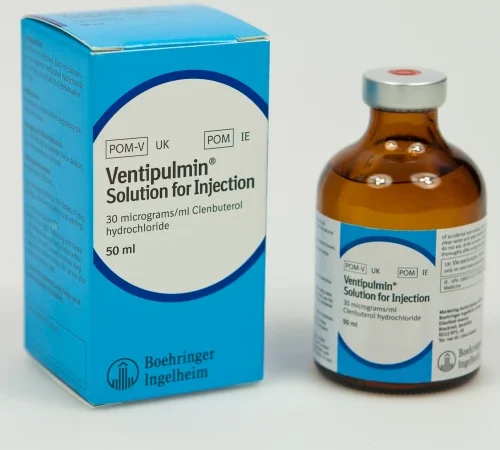
Reviews
There are no reviews yet.