
-14%
$70.00 Original price was: $70.00.$60.00Current price is: $60.00.
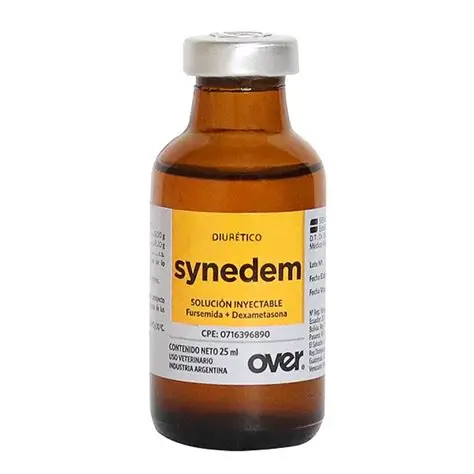
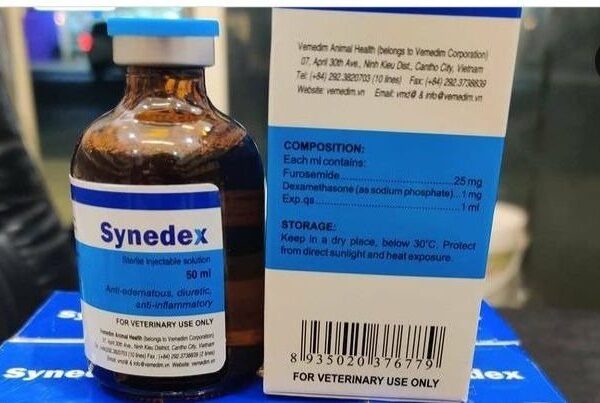
Synedem Injection 25mL is a veterinary injectable formulation containing furosemide 5g and dexamethasone 21-phosphate 0.2g per 100mL. The manufacturer’s product information describes Synedem as a diuretic, anti-inflammatory and anti-edematous injectable intended for cattle, horses, pigs and dogs.
The 25mL presentation is supplied in individual vials, with manufacturer information also describing boxes containing 12 × 25mL vials.
Synedem combines two pharmacologically different medicines. Furosemide is a potent loop diuretic that promotes the elimination of excess fluid through increased urine production, while dexamethasone 21-phosphate is a corticosteroid with anti-inflammatory activity.
Because this combination can significantly affect fluid balance and inflammatory responses, Synedem is a veterinary medicine that should be used according to the exact product label and under professional veterinary direction.
Synedem is an injectable veterinary medicine formulated around two active ingredients:
The manufacturer’s information classifies it as an injectable diuretic, anti-inflammatory and anti-edematous product.
The combination is intended to address conditions in which fluid accumulation and inflammation are clinically relevant.
Synedem should not be regarded as a general-purpose medicine for ordinary swelling. Edema can occur for many different reasons, including cardiovascular, renal, hepatic, inflammatory and other disorders. Identifying the underlying cause is an important part of veterinary treatment.
Synedem is listed for equine use by the manufacturer.
For horse owners and equine professionals researching Synedem 25mL for horses, the product’s dual-action formulation is particularly relevant when a veterinarian is managing a condition involving fluid accumulation together with inflammation.
However, the presence of swelling does not automatically mean that a diuretic is appropriate.
A horse with edema may require diagnostic investigation to determine whether the cause is:
Treatment should therefore be based on veterinary diagnosis rather than the appearance of swelling alone.
Furosemide is a loop diuretic.
Its principal effect is to increase renal excretion of water and electrolytes. This can help reduce excessive fluid accumulation when a diuretic is medically indicated.
Furosemide is commonly used in veterinary medicine in circumstances involving fluid overload and certain forms of edema.
Because it changes fluid and electrolyte balance, inappropriate administration can be harmful.
Dexamethasone is a corticosteroid with potent anti-inflammatory activity.
It can reduce inflammatory responses in conditions where corticosteroid treatment is medically appropriate.
Unlike furosemide, dexamethasone does not primarily work by removing fluid. Its role in Synedem is associated with the anti-inflammatory component of the formulation.
The combination therefore provides two distinct pharmacological actions.
Synedem works through the combined effects of its two active ingredients.
Furosemide promotes increased urinary excretion of sodium and water. This helps the body eliminate excess fluid when fluid retention is present.
Dexamethasone suppresses inflammatory activity through corticosteroid mechanisms.
Together, these effects explain why the product is described as diuretic, anti-inflammatory and anti-edematous.
The two ingredients should not, however, be interpreted as treating every underlying disease that causes edema.
The manufacturer’s information lists Synedem for various forms of edema, including:
Edema is a symptom rather than a single disease.
For example, pulmonary edema and peripheral swelling can have very different underlying causes and may require different treatment strategies.
Veterinary examination is therefore essential.
Pulmonary edema involves abnormal accumulation of fluid in or around the lung tissues and can interfere with normal breathing.
A horse or other animal experiencing significant respiratory difficulty requires prompt veterinary attention.
A diuretic such as furosemide may be used in selected cases, depending on the underlying diagnosis.
Synedem should not be used as a substitute for emergency veterinary assessment when an animal is struggling to breathe.
The manufacturer’s information includes pulmonary congestion among the listed indications.
Pulmonary congestion can be associated with several cardiovascular and other conditions.
The veterinarian may need to evaluate:
The appropriate treatment should be based on those findings.
Ascites refers to abnormal accumulation of fluid within the abdominal cavity.
The manufacturer lists ascites among Synedem’s indications.
Ascites can arise from several underlying conditions, so simply removing fluid does not necessarily correct the underlying problem.
Veterinary assessment is particularly important when abdominal fluid accumulation is persistent or recurrent.
Renal conditions can affect the body’s ability to regulate fluid and electrolytes.
Because furosemide acts directly on renal electrolyte and water handling, veterinary supervision is important when using a furosemide-containing product in an animal with kidney disease.
The veterinarian should determine whether the animal is adequately hydrated and whether diuretic therapy is appropriate.
Heart disease can contribute to fluid accumulation.
The manufacturer’s product information includes cardiac edema among the listed indications.
In such cases, treatment generally needs to address the underlying cardiovascular condition as well as fluid accumulation.
Synedem should therefore be viewed as part of a broader veterinary treatment strategy rather than a stand-alone solution for heart disease.
Liver disease can also be associated with fluid abnormalities.
Because hepatic disease can alter metabolism, circulation and fluid regulation, veterinary evaluation is important before administering a combination containing a corticosteroid and potent diuretic.
The veterinarian can determine whether the expected benefits justify the treatment.
The manufacturer’s information includes gestational edema among the listed conditions.
Pregnant animals require special consideration when medicines are administered.
The veterinarian should determine whether Synedem is appropriate for the specific animal, pregnancy stage and clinical circumstances.
Do not administer the product simply because swelling develops during pregnancy.
Swelling in horses can have many causes.
Localized swelling following an injury is not necessarily equivalent to systemic fluid retention.
Before using a diuretic, a veterinarian may determine whether the swelling is:
The distinction is important because treatment differs according to the cause.
Manufacturer information states that Synedem can be administered by intramuscular injection or slow intravenous injection.
Because this is an injectable medicine, administration should be performed by a veterinarian or appropriately trained professional.
The exact route, dose and frequency should always be confirmed against the current label for the specific product.
Do not administer an intravenous injection rapidly. The manufacturer specifically describes the intravenous route as slow.
Published manufacturer information gives species-specific dosage guidance. For cattle, horses and pigs, the manufacturer lists 1mL per 50kg body weight; for dogs, it lists 0.25–0.5mL per 5kg body weight per day.
Another product information source provides a broader professional dosing range for large animals, illustrating why the exact label for the supplied formulation should be followed.
The veterinarian should establish the final treatment protocol based on:
Do not use the bottle size as the dose.
Furosemide can produce significant changes in urine production and electrolyte balance.
Too much diuresis may contribute to:
Dexamethasone can also produce significant systemic effects.
The combination therefore warrants careful professional monitoring.
Furosemide increases the elimination of water and electrolytes.
The manufacturer’s product documentation specifically advises monitoring electrolyte balance during intensive or prolonged treatment.
Important electrolytes include:
Electrolyte disturbances can affect muscles, nerves, heart function and overall performance.
This is particularly important in horses because significant electrolyte imbalance can have serious consequences.
An animal receiving a potent diuretic should be monitored for hydration.
Excessive fluid loss can be problematic, particularly if the animal is already dehydrated.
Before administering Synedem, the veterinarian should consider:
Treatment should be adjusted according to the animal’s response.
Furosemide acts through the kidneys.
Animals with kidney problems require individualized veterinary assessment.
The veterinarian may need to monitor renal function and fluid balance during treatment.
A diuretic should not be administered simply because an animal has visible swelling.
Dexamethasone can affect immune function and metabolism.
Corticosteroid therapy can also influence:
The veterinarian should consider the animal’s complete medical history before treatment.
Tell the veterinarian about every medicine the animal is receiving.
This includes:
Drug interactions can change the risk profile of treatment.
Horse owners should exercise particular caution when treating competition animals.
Furosemide and dexamethasone can be subject to competition regulations, and the rules differ among racing and sporting organizations.
One product reference specifically flags Synedem as associated with doping considerations.
Trainers should therefore check the current rules of the relevant racing or equestrian organization before treatment.
Never assume that a withdrawal interval from one organization applies to another.
Synedem should not be used simply to manipulate a healthy horse’s fluid balance for performance purposes.
Fluid loss can affect hydration and electrolyte status.
If a horse has respiratory difficulty, swelling or another medical issue, the priority should be veterinary diagnosis and appropriate treatment.
Using medication to conceal clinical signs can delay appropriate care.
The manufacturer’s information lists dogs among the target species.
However, canine dosing differs from large-animal dosing.
A dog should receive only the amount prescribed by the veterinarian for its particular condition and weight.
The manufacturer also identifies cattle and pigs among the target species.
Food-producing animals require additional consideration regarding withdrawal periods and local regulations.
Never assume that a product authorized for one species can automatically be used in another food-producing species without appropriate veterinary direction.
For cattle and pigs intended for food production, the veterinarian should confirm:
The withdrawal period applicable to one formulation or jurisdiction may not apply elsewhere.
Potential adverse effects are associated with both major components of the formulation.
Furosemide can cause excessive fluid and electrolyte loss when improperly administered.
Dexamethasone can produce corticosteroid-related effects, particularly with inappropriate or prolonged use.
Seek veterinary advice if the animal develops unexpected:
Serious symptoms require prompt veterinary attention.
Storage instructions should be taken from the manufacturer’s current packaging.
One should always:
Do not use an injectable product if its appearance or container integrity is inconsistent with the manufacturer’s instructions.
When purchasing Synedem 25mL, customers should verify the exact product details.
Key information includes:
Product: Synedem
Presentation: 25mL vial
Form: Injectable solution
Furosemide: 5g/100mL
Dexamethasone 21-phosphate: 0.2g/100mL
Target species: Cattle, horses, pigs and dogs according to manufacturer information
Administration: Intramuscular or slow intravenous
Classification: Diuretic, anti-inflammatory and anti-edematous veterinary injectable
Always compare these details with the actual packaging supplied.
Customers in the United States should verify the regulatory status and lawful use of the specific product before purchase or administration.
Veterinary drug regulations can vary by jurisdiction.
A product marketed internationally does not automatically have the same approval status in the United States.
Veterinarians should determine the appropriate treatment and, where relevant, consider authorized alternatives.
Customers searching for Synedem 25mL in Canada, Australia, France, Germany, Spain, the Netherlands, Mexico and other international markets should check local requirements.
Regulations may differ regarding:
This makes accurate product identification particularly important for international purchases.
This product page naturally addresses relevant searches such as:
These terms are incorporated according to their relevance rather than repeated unnaturally.
Synedem 25mL is a veterinary injectable solution containing furosemide and dexamethasone 21-phosphate. The manufacturer describes it as diuretic, anti-inflammatory and anti-edematous.
Each 100mL contains 5g of furosemide and 0.2g of dexamethasone 21-phosphate.
The manufacturer’s listed indications include pulmonary edema, pulmonary congestion, ascites, renal edema, gestational edema, cardiac edema and hepatic edema.
Yes. Horses are among the species listed by the manufacturer.
The manufacturer describes intramuscular or slow intravenous administration.
Dogs are among the manufacturer’s listed target species, but the appropriate dose must be determined by a veterinarian.
Yes. The formulation contains furosemide at 5g per 100mL.
Yes. It contains dexamethasone 21-phosphate at 0.2g per 100mL.
Edema is one of the principal conditions described in the manufacturer’s product information.
Competition rules must be checked before administering Synedem to a competition horse. Medication and prohibited-substance requirements vary between organizations.
Treatment duration should be determined by the veterinarian. Prolonged or intensive diuretic and corticosteroid treatment requires particular attention to fluid and electrolyte balance.
Follow the manufacturer’s storage instructions on the specific product packaging.
Synedem Injection 25mL is a veterinary injectable combination of furosemide and dexamethasone 21-phosphate. The manufacturer’s information identifies the product as a diuretic, anti-inflammatory and anti-edematous medicine intended for horses, cattle, pigs and dogs.
The furosemide component promotes fluid elimination, while dexamethasone contributes potent anti-inflammatory activity. This combination makes Synedem relevant to veterinary treatment plans involving certain forms of edema and inflammation.
For equine owners searching for Synedem 25mL for horses, it is important to understand that edema is a clinical sign rather than a diagnosis. Pulmonary, cardiac, renal, hepatic, gestational and localized edema can have different causes and require different approaches. The veterinarian should determine the reason for fluid accumulation before treatment.
Synedem is an injectable product and should be administered according to the manufacturer’s instructions by an appropriately trained professional. The manufacturer’s information describes intramuscular or slow intravenous administration and provides species-specific dosing guidance.
Because furosemide can significantly affect fluid and electrolyte balance and dexamethasone can produce systemic corticosteroid effects, responsible use and professional monitoring are particularly important. Intensive or prolonged treatment may require monitoring of electrolytes such as sodium, potassium and chloride.
Competition-horse owners should also verify current medication rules before treatment, while food-producing animal owners must follow applicable withdrawal and regulatory requirements.
For customers researching Synedem Injection 25mL, Synedem for horses, furosemide and dexamethasone injection, equine diuretic injection, or veterinary anti-edema injection, Equines Vet provides product-focused information designed to make the formulation, applications, precautions and responsible use easier to understand.
Synedem injection is an Anti-edematose, diuretic. Many veterinarians use this drug … Administration and Dosages: Intramuscular or intravenous slow injection
Treatment of pulmonary edema, pulmonary congestion, ascites, renal edema, gestational edema, cardiac edema and hepatic edema.
Cattle, horses, swine and dogs.
The studies have demonstrated that alflutop substantially relieves pain, improves the function of the diseased joints in patients with OA. Arthrosonography has shown that the drug exerts an antiinflammatory effect, retards the progression of a pathological process in the joint. has been found to be more effective in knee OA than in hip OA, which is determined by that its combined use regimen may be used in knee OA. synedem injection
The necessity and high efficiency of repeated courses of alflutop therapy are shown intramuscularly (in coxarthrosis) or intramuscularly in combination with the intraarticular injection of the agent (in knee osteoarthrosis). Physical examinations were made in control periods: before and immediately, 3, 6, and 12 months after treatment. Arthrosonography was used as an objective method for controlling the efficacy of the drug. The studies have demonstrated that alflutop substantially relieves pain, improves the function of the diseased joints in patients with OA. Arthrosonography synedem injection The necessity and high efficiency of repeated courses of alflutop therapy are shown intramuscularly (in coxarthrosis) or intramuscularly in combination with the intraarticular injection of the agent (in knee osteoarthrosis). Physical examinations were made in control periods: before and immediately, 3, 6, and 12 months after treatmen


No account yet?
Create an Account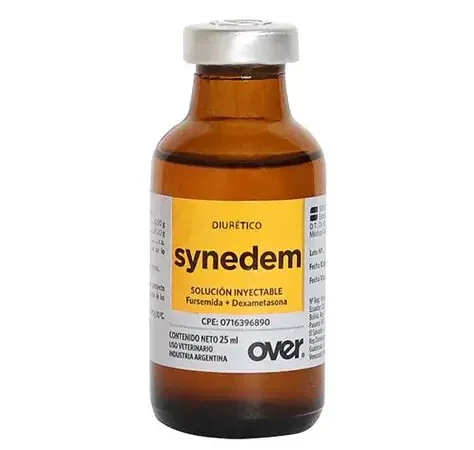
Reviews
There are no reviews yet.